A Rainbow Nation, A New Life
September 4, 2026
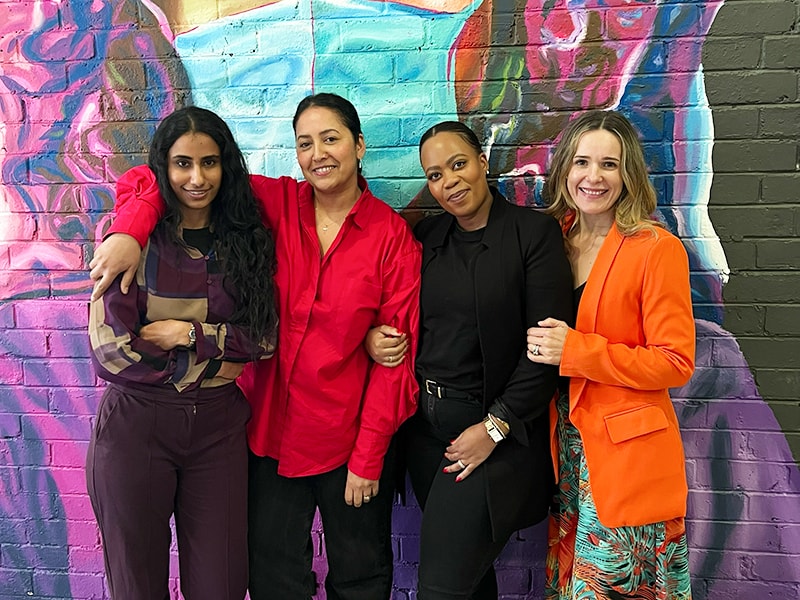
Natasha didn't recognise the name at first. In fairness, she wasn't entirely sure what country she was in either, for about ninety seconds of that conversation.
She’d been applying for jobs everywhere, the way you do when you’re trying to build a life from scratch on the other side of the world, and one application had blurred into the next. So, when the phone rang and a recruiter’s voice came through, warm, familiar, unmistakably South African, her brain did a small, confused little loop. Was this a callback from home? Had she somehow applied for a job back in Cape Town by accident? She genuinely couldn’t tell, and honestly, she didn’t much care, the voice sounded like home, and she wasn’t about to interrupt.
Then the name landed. Chris Barnard Health.
“I wondered why someone from South Africa was calling me for a job opportunity,” she says, laughing about it now. It took the whole conversation for the penny to drop, the surgeon, the heart, the history, by which point she’d more or less forgotten she was supposed to be the one answering questions. By the time it did click, something had already shifted, though she wouldn’t understand what yet.
For almost two years, Natasha describes feeling lost. Not dramatically, not in a way anyone watching from the outside would have noticed. Just quietly, persistently, the way you feel lost in a country that looks enough like home to ache, different enough to remind you constantly that it isn’t and that the people you loved aren’t there to share this journey with you. On the upside, Melbourne’s café and coffee culture was a good distraction and more of a thing than she was accustomed to. However, the beaches weren’t where the postcards said they’d be. Bondi, it turned out, was in an entirely different city. She laughs about that now.
And then she started working at Chris Barnard Health, and the ache was less persistent.
“This job became the missing piece,” she says. She’s careful to say it plainly, almost defensively, the way you say something true that you’re worried won’t be believed. No, I wasn’t told to say this, she adds.
Kathleen says almost the exact same thing, in almost the exact same words, from a different chapter of her life entirely.
She left Durban with her husband in the wake of the 2021 looting that tore through Durban and Johannesburg that year, the kind of event that turns a long-held maybe into an immediate, unarguable now. She shares that her mother’s sadness wasn’t because she doubted the decision, but because she already knew what it meant: the beginning of a distance that would never fully close again.
What Kathleen didn’t expect, landing in Australia, was to find her own country waiting for her in a completely different form. “I discovered that Australia was also a rainbow nation,” she says, “so being surrounded by people different to me was something that made me feel at home.” It’s a strange, lovely inversion, the very diversity that once defined South Africa’s history, rebuilt by accident, twelve thousand kilometres away, inside a boutique home care company she’d never heard of before she needed a job.
“When you leave your home country, you don’t realise the sense of belonging you are looking for. And I found it here. No, I wasn’t paid to say this. It’s the truth.” She says.
Part of that, she’ll tell you, is Supun. He’s Sri Lankan, a different accent, a different rugby team to argue about, but the same particular ache of leaving home. Kathleen talks about him like a favourite uncle, the kind who doesn’t need the backstory explained because he’s already lived it. He just also happens to run the company.
Annelize never actually meant to stay.
What started as a gap year, common enough in South African households, the kind of thing you do before real life begins, quietly became something else entirely. A work permit. Then permanent residency. Then a passport. Then, somewhere in the accumulating years, a husband, two children, a house, a life she’d never explicitly chosen but wouldn’t trade back now for anything. “If I knew I wasn’t going to come back,” she admits, laughing at herself a little, “I don’t think I would have left.”
She talks about what she left behind with more precision than most people manage: not just family, but identity. “A place where people knew me and understood me,” she says. “When you go abroad, you go to a place no one knows you or your past. They have only face value, no idea of who you are and your depth, yet.” That word sits at the centre of everything: yet. The whole quiet courage of leaving is contained inside it, the willingness to be a stranger for a while, trusting that the depth will eventually be seen.
It was seen, in the end, at Chris Barnard Health, for reasons Annelize can’t quite explain and doesn’t try to. She’s quick to say she’s not superstitious, not in the slightest, doesn’t read horoscopes, doesn’t knock on wood, wouldn’t know a sign from a coincidence if it introduced itself. And yet. “Definitely something else was at play,” she says of the coincidence that isn’t one, the surgeon’s name above the door of the company that would come to define her working life in Australia. Her own grandmother had died in an aged care facility back home, in circumstances she describes simply as neglect. She doesn’t dwell on it. She doesn’t need to. It’s there anyway, quietly, in the seriousness with which she talks about the work now:
“What you do here really can make a difference and matters a great deal to clients and their families.”
Thato was twelve when her mother, a nurse, decided her two daughters deserved a better future than the one South Africa could promise them.
Twelve is an age with no real say in a decision that reshapes everything, and Thato didn’t have one. Two weeks after landing, she started high school in a country whose summer heat hit her like hell had just opened its gates, which, as any twelve-year-old will tell you, is a genuinely terrible time to also be juggling hormones, a new uniform, and an entirely new set of people deciding whether you’re cool enough to sit with at lunch.
She grew up here, in the particular way migrant children do, half-formed by two countries at once. These days she calls it a barbecue, not a braai, and, in what she’ll admit is a small betrayal of her ancestors, grills franks instead of proper boerewors. For years, she was the only South African on the team, until, slowly, others arrived, and something she describes simply as wonderful began, the quiet relief of shared reference points, shared jokes, a shared shorthand for a home most of her colleagues had never seen.
By the time this is read, Thato will likely have worked her last shift, though her colleagues aren’t holding their breath. She’s already resigned once, officially, on paper, with all the appropriate paperwork, and then quietly kept showing up for shifts. At this point, the office pool isn’t betting on whether she’ll be back. It’s just betting on when. Her family is relocating to Perth, a new adventure, she calls it, with a trace of sadness in how she says it. She doesn’t believe in coincidences either, she was called for her Chris Barnard Health interview on her own birthday, and when asked what she’d tell someone back home still deciding whether to leave, her answer arrives instantly, unhesitating:
“Do it. You’ve got nothing to lose.”
Four women. Four different reasons for leaving, four different corners of South Africa, four different roads that somehow converged on the same boutique home care company on the other side of the world. None of them set out looking for a metaphor. But ask any of them what it's been like working alongside South Africans from entirely different backgrounds to their own, and the answer, in one form or another, is always some version of the same thing.
“It epitomises what South Africa stands for as a rainbow nation,” Kathleen says.
“There is that undeniable South Africanness,” says Annelize. “It reminds me of the resilient South African spirit, and what South Africans can achieve because of it. It was what South Africa was always meant to be.”
Not what it is. What it was always meant to be.
None of these women left because leaving was easy. They left because staying, for reasons as different as unrest, sleeplessness, a mother’s hope, or a gap year that quietly refused to end, had stopped being the better option. And once the decision was made, whatever shape it took, giving up was never really on the table. That’s not blind optimism. It’s the same resilience Annelize names outright, the thing she says South Africans simply carry with them, wherever they land.
They found colleagues who understood a joke in Afrikaans without needing it explained. They found a company built, almost improbably, around the name of a South African surgeon who once did something the world had never seen before. And somewhere in that overlap, without any of them quite planning it, they found the thing that’s hardest to manufacture and easiest to recognise once it arrives: a place where the very things that once made them feel like outsiders, their accents, their history, their unmistakable South Africanness, quietly became the thing that made them belong.
By Natasha Stagler
Marketing Coordinator