The Quiet Skills of Aged Care Workers that Speak Volumes
August 3, 2026
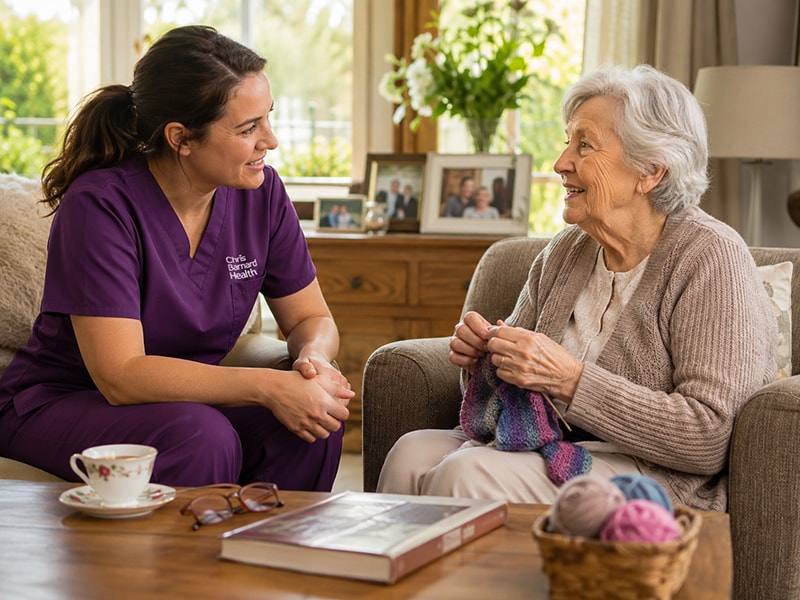
When people picture the skills an aged care worker needs, most jump straight to the clinical basics:
administering medication, assisting with mobility or understanding a care plan. These are essential, of course, but ask anyone who has actually worked in this field, and they’ll tell you the job asks a lot more than what people expect.
Australia’s aged care workforce is under real strain.
Sector modelling points to a shortfall of hundreds of thousands of direct-care workers within the next few decades as demand continues to outpace supply, and the workforce is only expected to grow more essential from here. Around half of all residential aged care employees are personal care workers, the very people this article is about.
What that data doesn’t capture is how those workers do the job well. Research into aged care worker wellbeing has found that carers’ sense of wellbeing is closely tied to whether they feel capable and equipped to provide genuinely good care, not simply whether they’re avoiding burnout. In other words, the soft skills below aren’t a “nice to have” layered on top of the job. For many workers, they’re the difference between a job that feels sustainable and one that doesn’t.
Patience that Doesn’t Run Out
Patience in aged care isn’t a one-off quality you show occasionally when things get hard. It’s a constant, quiet discipline.
It’s repeating the same story for the third time this week, with the same warmth as the first. It’s sitting with someone who’s frustrated by a body that doesn’t move the way it used to, without ever making them feel like a burden. It’s understanding that “slow” isn’t a problem to be fixed; it’s simply the pace the day needs to move at.
What this looks like in practice
A Support Worker allowing an extra twenty minutes for someone to button their own shirt, rather than stepping in to do it faster. It’s a small moment, rarely noticed by anyone else, but it’s the difference between care that preserves independence and care that quietly erodes it.
This kind of patience can’t be faked, and it certainly can’t be taught in a single training module. It’s built through genuinely caring about the person in front of you, more than the task on the list.
Emotional Intelligence, in Real Time
Every home our team walks into is different – different moods, different histories, different things left unsaid. Reading a room (or in this case, a person) well enough to know what they need in that exact moment is one of the most underrated skills in this line of work. Industry training bodies consistently rank empathy as one of the single most important soft skills in aged care, precisely because so much of the role depends on understanding what a client is feeling, not just what they need done.
Reading the room
Sometimes that means recognising when someone wants to talk, and when they’d rather sit quietly with the company alone. Sometimes it means noticing a shift in tone that signals something isn’t quite right, long before it becomes a bigger issue.
Matching the moment
On a good day, that might mean a bit of cheek and banter. On a harder day, it’s a softer, steadier presence, no forced cheerfulness, just quiet consistency.
This kind of emotional intelligence is a skill built through experience, empathy and paying close attention, not something that shows up on a resume.
Problem-Solving on the Spot
No two days in home care look the same – even if you are visiting the same client – and very few go exactly to plan. A Support Worker might arrive to find a client unexpectedly unwell, a fridge that isn’t cold enough, or a family member who needs reassurance just as much as the client does.
The reality of working solo
In these moments, there’s no supervisor down the hall to ask, no manual to flip open. Our team makes calm, sound judgment calls, often on their own, often quickly and always with the client’s best interest at heart.
Here What it Looks Like in Real Life
Arriving to find a client more confused than usual isn’t a scenario with a script. It takes judgment to know whether this calls for a call to the Care Partner, a check-in with family, or simply a calmer, slower approach to the visit itself, and the confidence to make that call correctly, in the moment.
That’s not something you can train in a classroom; it’s built through experience, trust in your own judgment and a genuine commitment to getting it right.
Discretion and Respect for Dignity
Walking into someone’s home is an act of trust most people underestimate. Our team sees people at their most vulnerable; getting dressed, managing health conditions, navigating parts of daily life they may once have done entirely on their own.
Handling that with quiet discretion and unwavering respect for someone’s dignity is a skill in itself. It’s knowing when to step in, and just as importantly, when to step back and let someone do something themselves, even if it takes longer. It’s protecting someone’s independence and sense of self, not just their safety.
The Ability to Simply Be Present
Perhaps the most overlooked skill of all is the ability to be genuinely present with another person; that means no phone, no distraction, no rushing to the next task on the list.
For many older Australians, especially those living alone, that undivided attention is rare and deeply valued. It’s not a clinical skill. It doesn’t show up in a competency framework. But it might be the single most important thing our team brings into someone’s home each day.
The Support Behind the Skill
These skills don’t exist in a vacuum; they’re backed by a business built to put the right person, in the right home, at the right time.
That’s why our Allocations Team doesn’t just fill a shift; for complex care needs, they match the right skill set to the specific need, not just the next available name on a list. It’s why we’re able to draw on staff across Victoria, Tasmania, New South Wales & ACT, Queensland, Western Australia, the Northern Territory, and South Australia. So, wherever our clients are, the right support is within reach. And it’s why facilities who work with us keep coming back: as one Facility Manager put it, “The customer service is next to none… CBNA is focused on its clients.”
The skills above are what our team brings to the door. The systems above are what make sure they get there in the first place.
Why this Matters
None of these skills replace the clinical training, qualifications and ongoing professional development our team undertakes; those remain the foundation of safe, quality care. But they’re not the whole story.
The best aged care workers combine technical competence with something harder to measure: patience that doesn’t waver, emotional intelligence that reads a room instantly, problem-solving under pressure, discretion, and the simple, generous act of being fully present.
To every Support Worker, Nurse, Allied Health care worker, Care Partner and team member across Chris Barnard Health, THANK YOU for the skills nobody tells you that you’d need, and for showing up with them, every single day.
Priscilla Nunn
Recruitment (Agency) – Team Leader
If you’d like to learn more about the people behind Chris Barnard Health’s care, or explore a career in aged care with our team, get in touch (homecare@chrisbarnardhealth.com) — we’d love to hear from you.