Occupational Therapy
Our aged care occupational therapy services help older adults stay safe, independent and confident in everyday life. Our occupational therapists focus on the activities that matter to you – from moving safely around your home to managing personal care and daily routines. Occupational therapy can be provided in your home or community setting, letting your occupational therapist see how you manage activities in your usual environment and recommend practical solutions that fit your needs.
What is Occupational Therapy?
Occupational therapy is an allied health service delivered by qualified, registered occupational therapists. Rather than focusing only on a diagnosis, it looks at how your health, abilities and surroundings affect the things you do every day.
Under Support at Home, occupational therapy sits within Clinical Supports alongside services such as physiotherapy, podiatry, dietetics, speech pathology, psychology and exercise physiology.
An aged care occupational therapist may help with:
- Home safety assessments and falls prevention
- Mobility aids and assistive equipment
- Home modifications
- Personal care and self-care tasks
- Cognitive assessments and memory strategies
- Safe transfers and movement
- Equipment trials and prescription
- Support after a hospital stay, illness or fall
The goal of aged care occupational therapy is to provide practical support that helps you remain as independent as possible.
Occupational Therapy for Everyday Activities
As we age, everyday tasks can become more difficult due to reduced strength, balance, mobility, cognitive changes or chronic health conditions.
Occupational therapists work with you to understand which activities are difficult and why, then introduce practical strategies to make them safer and easier — whether that’s finding an alternative way to complete a task, changing the layout of your home, or recommending assistive equipment.
This can support activities such as:
- Showering, bathing, dressing and grooming
- Preparing meals
- Getting in and out of bed or chairs
- Moving around the home and using the bathroom
- Managing household activities
- Returning to meaningful hobbies and routines
Home Safety Assessments and Modifications
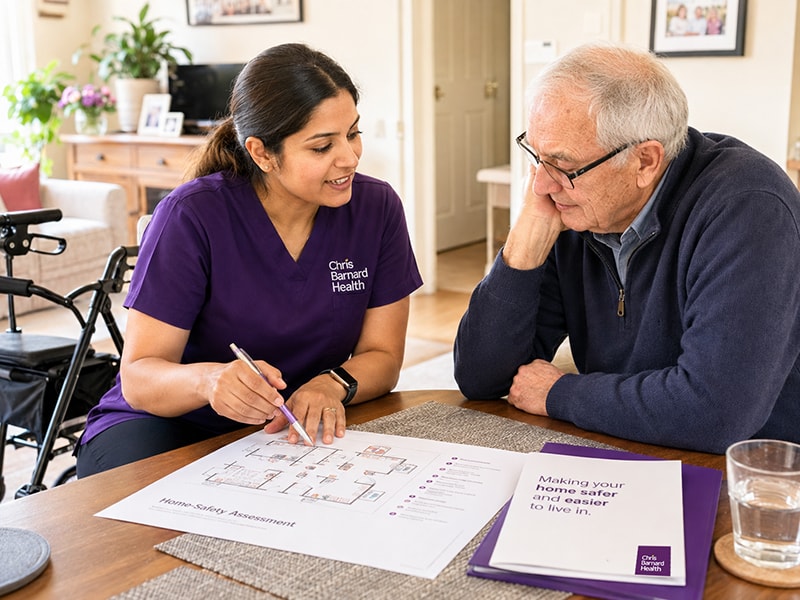
A home safety assessment is an important part of aged care occupational therapy. Your occupational therapist can walk through your home environment with you and identify hazards that increase the risk of falls or make everyday tasks harder – from doorway widths and lighting to rugs, bathroom access and furniture placement.
Recommendations may be as simple as rearranging furniture or removing a trip hazard, or may involve significant home modifications, such as grab rails, improved access or shower equipment to improve safety and independence.
Falls Prevention
Falls can significantly affect confidence, mobility and independence. Occupational therapy services help reduce falls risk by looking at both the person and the environment.
Occupational therapists assess the home for hazards and develop practical falls prevention strategies, recommending equipment, home modifications and safer ways to complete everyday activities. They may also assist with safe transfers and strategies to improve balance – particularly valuable after a previous fall, hospital discharge or period of reduced mobility.
Cognitive Support and Memory
Occupational therapy can also support older adults experiencing cognitive changes. Our occupational therapists develop practical strategies to help manage cognitive impairments and make daily routines easier – from establishing predictable routines and using visual reminders, to simplifying complex tasks and organising the home for safety.
Cognitive assessments can help an occupational therapist understand areas of difficulty and create a more personalised care plan.
Supporting Independence After Hospital Discharge
Returning home after a hospital stay can be challenging, particularly if your mobility, strength or confidence has changed. Aged care occupational therapy can support this transition by assessing the home, identifying risks and recommending practical changes before problems occur.
Your occupational therapist may review how you manage transfers, personal care and other daily living tasks, then recommend equipment, home modifications or alternative ways of completing activities – helping you regain confidence and support a safer return to routine.
Occupational Therapy in Residential Aged Care
Occupational therapy is also available in residential aged care facilities and other aged care settings. Within residential aged care, occupational therapists support residents with functional assessments, cognitive needs, falls prevention, pressure care, mobility and equipment.
They work alongside nurses, support workers and the wider allied health team so recommendations are incorporated into the resident’s broader care plan – helping aged care providers support the safety, function and quality of life of aged care residents.
We Have Relationships with Occupational Therapists Across Melbourne
We have established relationships with Occupational Therapists across Melbourne, and we’re also happy to work with your existing Occupational Therapist if you have one (they’ll simply need to be onboarded with us first, just speak to your Care Partner to arrange this).
If you’re already working with an Occupational Therapist but would prefer to switch to one of our in-house team, we’ll work closely with you to carry across the routine and recommendations you’re used to, so there’s no disruption to your progress.
How We Deliver Occupational Therapy
Fully Funded Under Support at Home
Occupational therapy falls under Clinical Supports within Support at Home. If it’s in your Care Plan, it’s fully government-funded with no co-contribution required.
Equipment and home modifications may be funded through your Support at Home arrangements or, for larger items, through the Assistive Technology and Home Modifications pathway. Chris Barnard Health also offers privately funded occupational therapy for those not receiving government funding.
Who Can Access Occupational Therapy?
Occupational therapy is available to eligible Support at Home participants who need coordinated support to remain safely and independently at home. It may also support younger people living with disability, dementia or other care needs, and forms an important part of restorative care for people needing more intensive assistance after changes in health or mobility.
Your Rights and Our Commitment
Your occupational therapy service is guided by your rights under the Aged Care Act 2024 – to make decisions about your care, be treated with dignity, be involved in planning your services, and raise concerns and receive a response. If something goes wrong, we use an open disclosure approach focused on prompt, transparent communication.
Why Choose Chris Barnard Health for Occupational Therapy?
Frequently Asked Questions
What do occupational therapists do in aged care?
They assess how a person’s health, physical abilities, cognitive function and home environment affect everyday activities, then provide falls prevention, home safety assessments, equipment recommendations, home modifications and cognitive support.
Is occupational therapy covered by Medicare Australia?
Medicare may cover part of the cost of some allied health services in specific circumstances, usually requiring a care plan from your doctor. For eligible Support at Home participants, occupational therapy may instead be provided as a Clinical Support under the program.
How many OT sessions does Medicare cover?
There’s no universal number – it depends on your eligibility and funding or care-plan arrangement. Your GP or occupational therapist can explain what applies to you.
Do I need a diagnosis to access occupational therapy?
No. It can be arranged based on assessed need – a specific health condition, reduced confidence, a fall, general frailty or difficulty with daily activities.
Will occupational therapy cost me anything?
Under Support at Home, eligible occupational therapy provided as a Clinical Support can be fully government-funded when included in your Care Plan. Equipment and larger home modifications may have different funding arrangements, and privately funded therapy is also available.
Can occupational therapy be provided at home?
Yes. Home based occupational therapy lets the therapist assess your normal environment and see how you manage everyday tasks. It can also be provided in community and residential aged care settings, with telehealth available for some follow-ups.
How long does an occupational therapy assessment take?
This depends on your circumstances and the type of assessment needed. A home assessment may involve reviewing your environment, discussing your goals, and developing practical recommendations.
Need More Information on Occupational Therapy?
Call Chris Barnard Health on 1300 602 469 to find out more about aged care occupational therapy, home safety assessments, equipment recommendations and Support at Home. You can also complete our contact form and a member of our team will be in touch.
Trusted by care providers across Australia