What does Social Support entail?
Social Support is all about helping you stay connected, to community, to culture, and to the people and activities that make life feel like yours. Under the Support at Home program, Social Support sits within the Independence category, alongside services like Respite Care, Transport, and Assistive Technology and Home Modifications.
With Chris Barnard Health, Social Support can look like:
- Social visits: good company and real conversation, right in your own home
- Community outings: getting out to the places you enjoy
- Cultural support: staying connected to your language, traditions, and community
- Digital support: help video-calling family, or simply feeling more confident with technology
- Help attending appointments: having someone by your side for medical or personal appointments
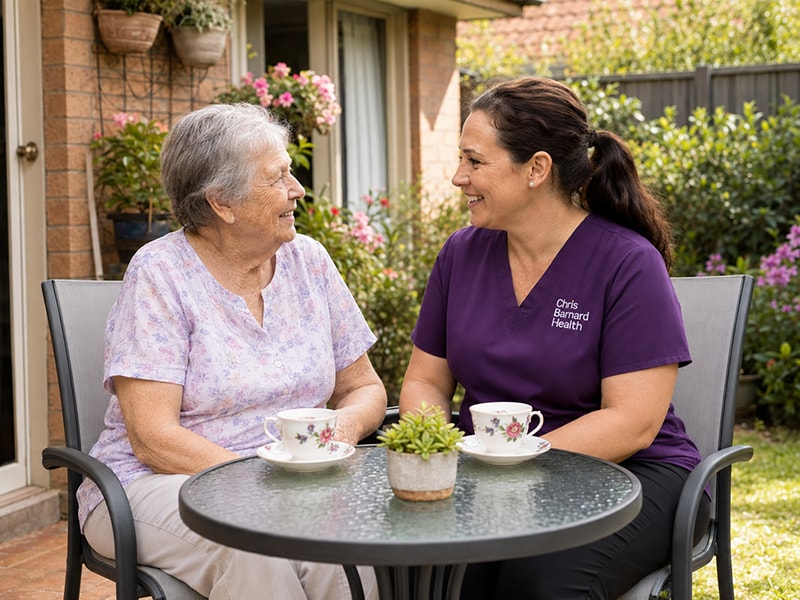
Here’s the thing about a support worker’s visit: it’s rarely just about the task on the list. More often, it’s genuine company. Someone who comes into your home, sits with you, and actually wants to know your story, not just what help you need that day.
How is Social Support Funded?
Social Support falls under the Independence category of Support at Home. This means, unlike clinical services such as Nursing or Physiotherapy, a small contribution may apply, usually somewhere between 5% and 50%, based on your income and assets. Don’t worry about working this out alone, though. Your Care Partner will walk you through exactly what applies to you, and help you decide how much of your quarterly budget makes sense to put toward staying connected.
Not yet receiving government funding? Or simply want a bit more social support than your care plan currently covers? We also offer privately funded Social Support, so cost is never the reason someone misses out on connection.
Why Connection Matters More Than You'd Think?
Loneliness among older Australians is more common, and more serious, than most people realise. Around 1 in 3 Australians experience it, and for people in residential care, that number climbs even higher. This isn’t just an emotional issue either. Chronic loneliness has been linked to real health risks, including heart disease, stroke, and even early death, risks that researchers compare to smoking.
The good news? The opposite is just as true. Genuine social connection has been linked to better health and a longer life. Sometimes, a familiar, caring face in someone’s week is one of the most powerful things we can offer.
What Makes Our Social Support Different?
It’s Company, Not Just a Checklist
When one of our support workers visits for social support, they’re not there to simply tick a box. They’re there to be a person, with another person. That might mean a cup of tea and a proper chat. Noticing when someone’s a little quieter than usual. Laughing along at the same story they’ve heard three times before, because the telling of it still brings joy.
We Match You with the Right Person, Not Just Any Person
We take the time to match you with a support worker who actually suits you, your personality, your interests, your sense of humour, not just your care plan. Maybe that’s someone who loves gardening as much as you do, or simply has a way about them that puts you at ease. That fit matters, and we don’t take it lightly.
A Plan Built Around Your Life, not a Template
Your Care Partner gets to know what connection really means to you. Maybe it’s a weekly outing. A standing coffee catch-up. A lift to church on Sundays. Or just someone checking in regularly. Whatever it looks like for you, that’s what we build your plan around.
Your Rights, Our Commitment
Every service we provide, including Social Support, is guided by your rights under the Aged Care Act 2024. That means you always have the right to:
- Make your own decisions about your care and how you spend your time
- Be treated with dignity and respect, always
- Be involved in planning your services, including who delivers them
- Speak up if something isn’t working, and know you’ll genuinely be heard
Who Can Access Social Support?
Social Support is available if you’re an eligible Support at Home participant, generally aged 65 or over (50 or over for First Nations people) and needing coordinated support to stay safely and independently at home. It’s also available to younger people living with disability, dementia, or other care needs not met through other specialist services.
Why Families Choose Chris Barnard Health for Shopping Assistance?
- We see it as company, not just a visit. Our support workers are chosen for genuine warmth, not just reliability, because we believe the relationship matters every bit as much as the task.
- The same familiar face, over and over. We invest in our own workforce rather than relying on rotating agency staff, so you’re far more likely to see someone who already knows your stories, your preferences, and what actually matters to you.
Frequently Asked Questions
Ready to Learn More?
Trusted by care providers across Australia